
IIM Lucknow has concluded its 2020-21 final placements.

Chinese companies keen to invest in Mumbai projects

The junior Ambanis - Anmol and Anshul - were inducted on the board to respect the wishes of the shareholders who during the recent AGM asked the management to get fresh blood into the company by bringing them on board.

All banks are eligible for privatisation. A committee of secretaries will decide which banks will be privatised, says Financial Services Secretary Debasish Panda.

Control over PSU banks is what is allowing the government to drive this scheme.

The company's planned capex for 2019-2020, which was Rs 12,000 crore, has now been revised down to around Rs 8,000 crore.
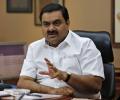
The group companies now lead the market capitalisation league table in sectors such as ports, power generation, gas distribution and transmission, and power transmission and distribution, ahead of incumbents in both public and private sector. This has Gautam Adani family the second wealthiest in business in India.

Revenue foregone on account of corporation tax exemptions is estimated to grow by 16 per cent in 2018-19 (FY19) versus 8.7 per cent in the previous year and 12 per cent in 2016-17, show the Budget documents.

Bankers and executives involved in ATM operations said challenges abounded in this segment.

The Rail Land Development Authority has invited online bids from private players to redevelop the station into an integrated commercial, retail, and hospitality hub.

Maybe Modi could ask a patriarch of the stature of the late G D Birla to flesh out the details of a new company to manage government land privatisation.

Almost all infrastructure ministries continued spending on capex throughout the lockdown, even as the Centre tried to maintain some semblance of economic normalcy.

The government has been waiting for the expansion by the private sector, Finance Minister Nirmala Sitharaman said while reminding India Inc of various measures including corporate tax rate cut, policy consistency, ease of doing business, among others to facilitate investment.
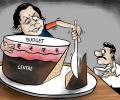
Niti Aayog will prepare the next list of central public sector companies for disinvestment in the next few weeks, its vice chairman Rajiv Kumar said on Thursday and expressed hope that the proposed asset reconstruction and management companies to address banks' bad loan woes will do a good job like the UTI. Days after Finance Minister Nirmala Sitharaman announced the Union Budget for 2021-22 laying out various measures (including disinvestment proposals) to bolster the pandemic-hit economy, Kumar also emphasised that the Modi government has shown consistent commitment for the welfare of farmers and for the improvement of the agriculture sector. "Now the process has begun... We will complete preparation of the next list in the next few weeks, we have got the marching order," Kumar said about the list of public sector companies for the next round of stake sales.

India maintained 43rd rank on an annual World Competitiveness Index compiled by the Institute for Management Development (IMD) that examined the impact of COVID-19 on economies around the world this year. The 64-nation list was led by Switzerland, while Sweden has moved up to the second position (from sixth last year), Denmark has lost one place to rank third, the Netherlands has retained its fourth place and Singapore has slipped to the fifth place (from first in 2020). At eighth, Taiwan reached the top-10 for the first time since the ranking began 33 years ago (moving up from 11th last year).

No longer Bengal's finance minister, Amit Mitra, Mamata's principal chief advisor, will still advise and aid the 'chief minister and finance department on all matters relating to management of state finance', represent the 'state government in national and international events/meetings/committees' and examine 'important proposals/files and policy issues relating to financial matters referred to him for advice/views'.

Companies expect recovery in second half of fiscal as BS VI approaches, claim banks and NBFCs showing greater interest in financing.

Indian and global airlines such as SpiceJet, Emirates, Virgin Atlantic among others too are marketing Covid-19 insurance products to attract passengers.

Rather than talking endlessly about lost and marginal opportunities, India's climate envoys need to start thinking bigger, says Mihir S Sharma.

Developers grappling with labour shortage and getting construction material to sites could be among a list of problems.

'This issue is related to national security because they were compromising the entire capital markets's core infrastructure by leaking confidential information.' 'What would have happened if the servers had come down?' 'Or some confidential information leaked to terrorists who could have knocked out our capital market?'

Hectic fundraising through initial public offerings (IPOs) is expected in October-November, with at least 30 companies are looking to collectively raise over Rs 45,000 crore through initial share-sales, merchant banking sources said. Of the total fundraising, a large chunk would be garnered by technology-driven companies. The successful IPO of food delivery company Zomato, which was overwhelmingly subscribed by over 38 times, encouraged new-age tech companies to come out with their primary share-sales.

Most of the NBFCs do not take public deposits but that does not mean they cannot create systemic risks. The banking system has at least Rs 57,000 crore exposure to IL&FS. Haven't the banks invested public money in IL&FS papers, asks Tamal Bandyopadhyay.
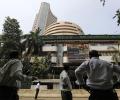
Kotak Bank was top loser among Sensex stocks, dropping by 3.28 per cent. HDFC Bank declined by 1.86 per cent, HDFC by 1.28 per cent and ICICI Bank by 0.99 per cent. SBI fell 0.5 per cent while Bajaj Finance by 0.72 per cent. Larsen & Toubro dropped 0.16 per cent.

DOIT is a 100 per cent subsidiary of Morgan Credits in which Rana Kapoor's daughters Radha, Roshini and Raakhe, are directors. In 2018-19, the company incurred a net loss of Rs 48.76 crore on revenues of Rs 59 crore - a sharp contrast to 2017-18 when it had profits of Rs 2.7 crore on revenues of Rs 43 crore. To fund these aggressive investments into its subsidiaries in 2018-19, DOIT used debt which doubled to Rs 600 crore in 2018-19 from the previous year.

It includes a session with Gadkari on analysing the initiatives needed to bridge the $1 trillion infrastructure deficit in the country.

"So you will not have anything better... democracy loving, capitalist respecting environment... in India," Sitharaman said at the event hosted by the Federation of Indian Chambers of Commerce and Industry in association with the US India Strategic and Partnership Forum.

'The 5.7% growth in the April-June period is an aberration because of GST.' 'Business activity in the last 15 days of the quarter was minimal or zero.'

Last year, the software giant launched a cloud adoption programme for SMBs.

Government sources say India could consider raising the policy repo rate if the rupee falls towards 61-62 to the dollar.

What made the tide turn in favour of the Adani group was the Covid-19 pandemic, which shut down airports the world over, including Mumbai. There was no cash flow and the firm started defaulting on salaries July onwards.

Ahead of India's annual budget presentation next week, IMF's chief economist Gita Gopinath has favoured the extension of the pandemic support measures, thrust on investment in infrastructure and expanding health sectors programmes like Ayushman Bharat, and a very credible divestment path for commercially viable companies. The Indian government has provided a lot of schemes for small and medium enterprises, most of which is in the form of liquidity support, Gopinath told PTI on Tuesday. "And you want to revisit it and see how effectively that is working and see whether additional support may need to be provided," she said while responding to a question on her recommendations to Finance Minister Nirmala Sitharaman, ahead of her presentation of the annual Union Budget on February 1. It would be a good time for banks and Non-Banking Financial Companies (NBFCs) to raise capital given the attractiveness of financing conditions at this point, she said.

The growth opportunity for a business, people running the business, governance structure at a company, technology adoption and the firm's belief in frugality are the list of priorities which should be considered before choosing a stock to invest in, Jhunjunwala said.

Finance Minister Nirmala Sitharaman on Monday presented the Budget for 2021-22 in the Lok Sabha that is expected to provide relief to the pandemic-hit common man as well as focus more on driving economic recovery through higher spending on healthcare, infrastructure and defence amid rising tensions with neighbours, As India emerges from the COVID-19 crisis, the ninth Budget under the Modi government, including an interim one, is widely expected to focus on boosting spending on job creation and rural development, generous allocations for development schemes, putting more money in the hands of the average taxpayer and easing rules to attract foreign investments.

The reason is believed to be a 19% increase in interest cost.

US Ambassador Richard Verma's tips to the Indian states.

'Everyone is still trying to understand the quantum of impact demonetisation will have on the economy.'

Fix India's real estate sector. Fix India's public sector banks, advises Tamal Bandyopadhyay.

As India emerges from the COVID-19 crisis, the ninth budget under the Modi government, including an interim one, is widely expected to focus on boosting spending on job creation and rural development, generous allocations for development schemes, putting more money in the hands of the average taxpayer and easing rules to attract foreign investments.

83% of the CEOS plan to hire more in the new year.
